The role of digital personalization
Industry Dive
12 min read · Apr 15, 2026
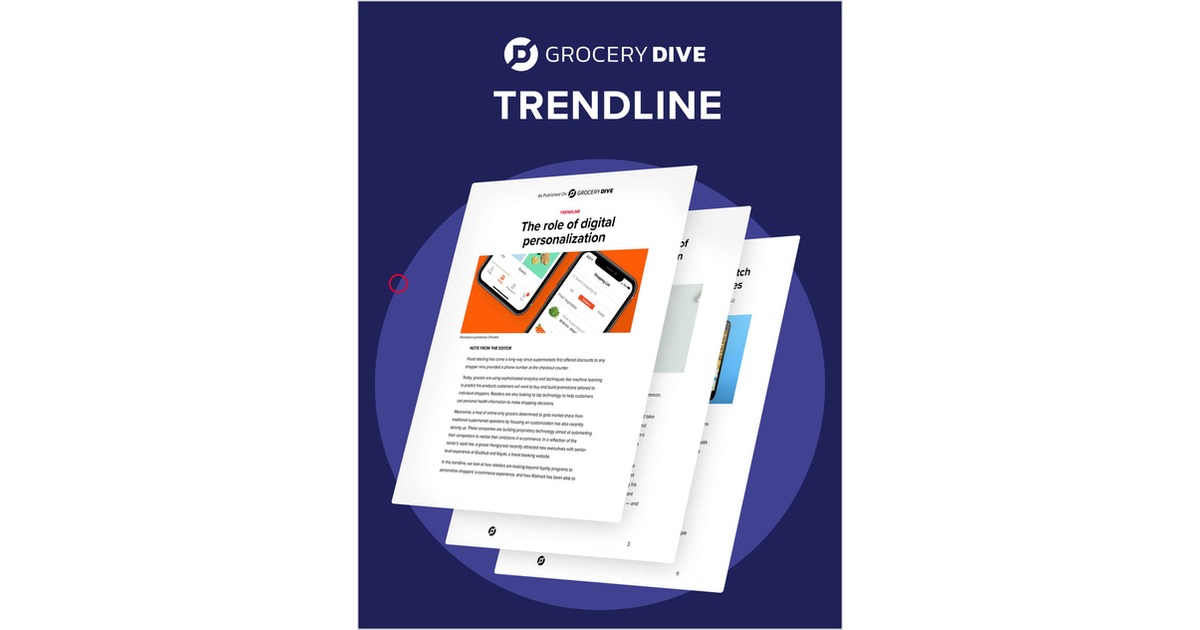
Food retailing has come a long way since supermarkets first offered discounts to any shopper who provided a phone number at the checkout counter. Today, grocers are using sophisticated analytics and techniques like machine learning to predict the products customers will want to buy and build promotions tailored to individual shoppers. Retailers are also looking to tap technology to help customers use personal health information to make shopping decisions. Meanwhile, a host of online-only grocers determined to grab market share from traditional supermarket operators by focusing on customization has also recently sprung up. These companies are building proprietary technology aimed at outsmarting their competitors to realize their ambitions in e-commerce. In a reflection of the sector’s rapid rise, e-grocer Hungryroot recently attracted new executives with seniorlevel experience at Grubhub and Kayak, a travel booking website. In this trendline, we look at how retailers are looking beyond loyalty programs to personalize shoppers’ e-commerce experience, and how Walmart has been able to use artificial intelligence to sharply increase the likelihood that online customers will accept the substitutions they’re offered when items are out of stock. In addition, we explore a tool from Shipt that allows online consumers to select a preferred shopper to handle their orders. Personalization is a complex new frontier for the grocery industry, but fast-evolving technology is giving retailers access to a host of intriguing opportunities to redefine how they connect with tech-savvy customers — and hold onto their business.
Access Full Briefing
This research is reserved for our professional network. Enter your work details below to access the full PDF report.